
How to Build a Data Portfolio in 20 Minutes
You might already have a data portfolio. You just haven’t packaged it yet.
Right now, your next great portfolio piece might be sitting in a messy GitHub repo, a random Python file, or an old Excel project you forgot about.
And honestly, that is a better start than you think. You just need to present it the right way.
Most people get stuck because they think their project needs complex code to count. But here is the truth about portfolio write-ups: A hiring manager is not reading your code. They are reading your story.
They mostly want to know four things:
What problem were you solving?
How did you approach it?
What did you find?
Why does it matter?
If your write-up answers those four questions clearly, you are already doing better than most people applying.
The 15-Minute Portfolio Makeover
So I sat down with my younger brother, Graham, who needed a portfolio for his job search.
I told him we were going to turn his messy files into a portfolio a hiring manager could understand in under 20 minutes.
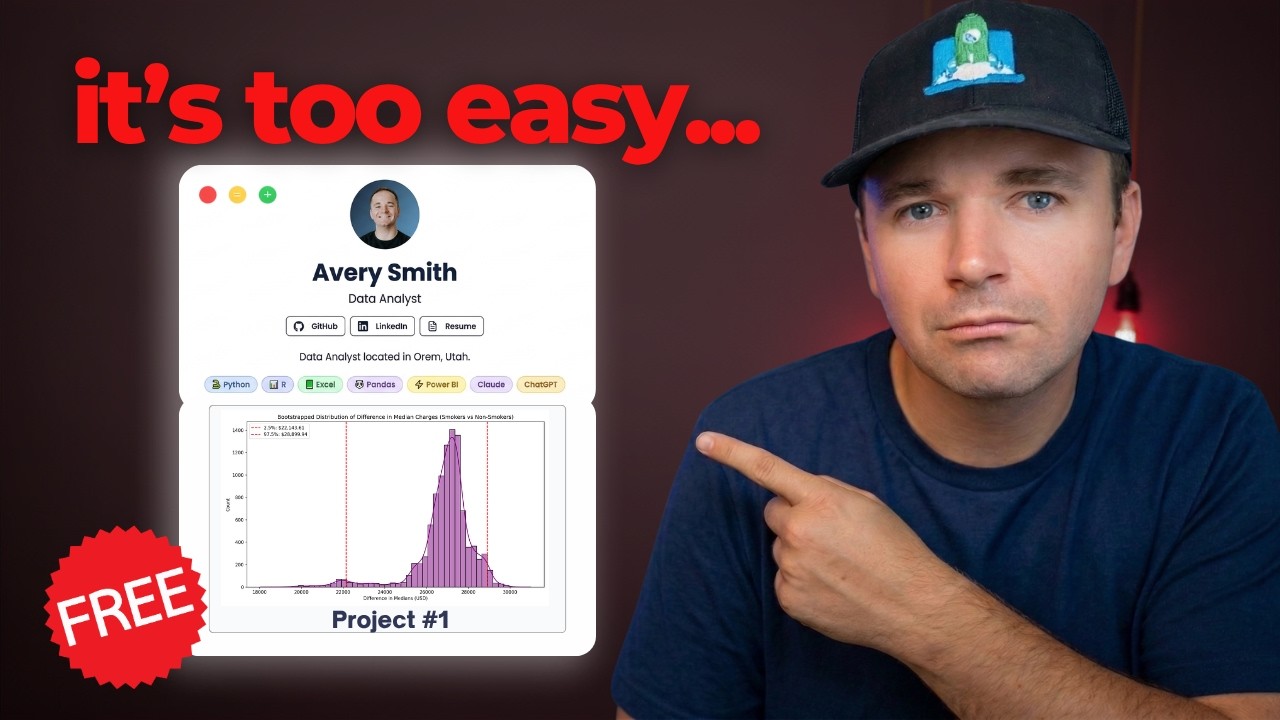
We started with a school assignment he had already finished. It was a Python project about how smoking and other factors affect annual medical costs.
Now, most people would look at that and think, “This is just homework. This is not portfolio-worthy.”
Not true.
That project had a real problem. It had data. It had methods. It had findings. It even had business value. The only problem was the packaging. A hiring manager would not understand it quickly.
That is where most people get stuck.
They don’t know how to turn “I cleaned some data and ran a model” into “I analyzed what drives medical costs so teams can make better budgeting decisions.”
That is what a portfolio is supposed to do.
Let Me Tell You What We Used
At that point, we did not need to start a brand-new project. We needed a better way to package the one he already had.
That is where we used MyDataFolio, a portfolio platform built specifically for data analysts.
It lets you import a GitHub repo, Tableau link, Excel file, or Python notebook. Then it helps turn the project into a full write-up. The problem, the steps you took, the key findings, and the business impact.
If you already have a write-up, MyDataFolio makes it super easy to just paste your work in and build the page from there.
But since Graham only had the code, we used the AI feature to read his GitHub repo and create a first draft.
In less than a minute, it pulled out the problem, the approach, the key findings, and the impact.

But did AI get everything perfect?
No. And this is the part I really want you to hear.
AI is good at giving you a first draft. It is not good enough to replace your judgment.
You still need to check every claim. You still need to ask, “Is this true?” “Did I actually do this?” “Would I feel okay explaining this in an interview?”
For Graham’s project, the AI summary was mostly on the right track, but he still had to check the details and make the real insight clearer.
We did the same thing with a second project, an NBA shot heat map he built in Python. Within a few minutes, he had two clean case studies live on his portfolio.
Then he added a cover image from a LinkedIn post about the NBA project, which made the page feel more real and easier to click.

One Of My Favorite Parts
Once the portfolio was live, we could also see page views for each project. Not just total visits to the whole portfolio, but views by project.
That changes the follow-up game.
If one project gets more views, maybe that is the one you lead with. If another gets ignored, maybe the title or cover image needs work. If people open your portfolio but never click a project, maybe your homepage needs to be clearer.
That is the fun part.
You can improve your portfolio like a data analyst by watching what people do.

You Already Have The Work
You do not need to start from zero.
That old Excel file can become a portfolio project. That Python notebook from class can become a portfolio project. That Tableau dashboard you never posted can become a portfolio project. That messy GitHub repo can still become a portfolio project.
But only if you clean up the story.
A hiring manager should not have to dig through folders, guess what your code does, or figure out why your project matters. That is your job.
Make it easy for them to see the problem, the tools, the process, the insight, and the action someone could take from your work.
PS: The platform we used to build Graham's portfolio is called MyDataFolio. I built it because I wanted a better way for analysts to present their work without needing to be a web designer.
You can import your existing projects, get a professional write-up generated, and track recruiter views all in one place. dYou can try it here.